Friday, February 10, 2012

Friday, February 3, 2012
Rant


‘“Hipster” “Love”” By Joe Eichner
GUY, mid twenties, average build, at a fairly
nice restaurant in New York City, presumably sitting at a table outside of it.
He wears black sunglasses, a faded vintage t-shirt and blue jeans, and sits
opposite APRIL, who wears a Bob Dylan concert t-shirt, large, oversized glasses
and an airy skirt (presumably from some Asian country) that adds to her
‘hipster/hippie’ look. She wears no
makeup. They are both young, white, and
look poorer than they are. The lights
open slowly to chatter from the restaurant, and we see GUY and APRIL with the
understanding that they’ve chatted for a bit already. GUY has a beer in his hand and is smoking a
cigarette.
GUY: My favorite book? I don’t
know. Kinda sorta hate that question. (Laughs
softly) How do you go about
answering a question like that? There’s
so many good books but of course when you get asked the question the only ones
you can think about are other peoples favorite books. I almost always feel like blurting out, “The
Catcher in the Rye,” but then I stop myself; I really liked “Franny and Zooey”
better, right? I mean, “Catcher in the Rye”—could
you be more cliché? But then again,
lately, whenever Salinger comes up numerous people (women, mostly) have said,
“Franny and Zooey” and I’ve nodded in approval, and thought to myself, “wow,
she really gets it, she’s really something.” Then, knowing this, I’ll take the
girl out on the date, under the pretext that she’s somehow ‘different’ or
‘indie.’ When I inevitably ask her which
Bob Dylan album she likes she’ll inevitably reply, “Blood on the Tracks,” and
my stomach will flip, cause of course “Blood on the Tracks” is my favorite
album of his too, and what are the chances that a girl not only appreciates
Salinger’s deeper cuts but Dylan’s too?
We’ll chat over
cocktails or something—no—cheap red wine—go to some poetry reading somewhere,
maybe even an open mic, one where people snap after people read, and perhaps she’ll
go up there too, and I’ll jealously look on, wishing I had the courage myself
to do it, and she’ll go up there and barely whisper something into the mic,
apologizing beforehand—“I don’t really have anything prepared—I mean, well, I
didn’t really think I was gonna do this—but, well, here goes!”—and then she’ll
proceed to produce barely audible whispers and discuss various abstractions and
images like “dirt under a politician’s fingernails while he mixes his stew” and
reference various hallucinogenic drugs –“the clouds, transparent yet lucid,
transient yet alive”— and I’ll look at her and think, “Wow, this girl’s really
great—I mean, you’ve got to give it to her, she’s got something there with that
whole fingernail motif” even though all I’m doing is justifying it in my head
because I haven’t slept with her yet, and I feel guilty for not really even
listening to the poem at all but instead having my eyes trained on her breasts
(braless, no doubt) and thinking about how after sex we might smoke a cigarette
in bed and, feeling empowered, I might grab my own poetry notebook from the
drawer by my bedside and read her a thing or two while she nestles her head
under the nook of my armpit, after which she’ll smile and say quietly, “that’s
amazing” and I’ll say, “No—it’s nothing really,” all the while thinking, “Wow,
she really gets me. Finally someone gets
me. She really sees my work as something
special, and—gosh I can’t get that fingernail thing out of my head.”
The
problem with this is that at some point she’s gonna say something like, “I
really like Lady Gaga—she’s so out there” and I’m going to want to disagree
with her—“she’s not really saying anything,” I’ll want to say, “She’s just
weird for the sake of weird”—but we’ll be holding hands and walking to
breakfast after we’ve just spent the night together and I’ll only hint at my
distaste. “I don’t know,” I might say, under my breath, and she’ll go on, about
Gaga’s originality, about her mix of music with performance art, about her
legion of fans, and I’ll say “But what about Marina Abromovich? Didn’t you hear
about that thing where she just sits at a table in a red dress and stares at
people for months upon months?” And she’ll say, “No, I haven’t heard of that,
but have you heard about James Franco? How he’s playing himself on General
Hospital—or at least, a mystique of himself, “Franco”?” Then I’ll say
condescendingly “Sure, I’ve heard of James Franco,” and then she’ll go on more
about Lady Gaga—how good she is on her acoustic sets, blah blah blah, and I’ll
say, “Well maybe she’s just more musically intelligent than Madonna, but, nevertheless,
nothing very new,” and the
conversation will stop. But I’ll have given up something—that belief I’d held
deep down that no, not everything is good.
Not every piece of pop art bullshit is really good, not everything can
be redeemed by saying, “Well, look, I mean it’s popular—look how many people
like this—you’ve gotta give her credit for that.”
And
I know this isn’t a good thing to say on a first date—I mean, here I am,
ranting about how much I hate “Franny and Zooey” and Lady Gaga and Salinger and
Dylan—and it’s probably coming off like I’m just some cynical, pretentious guy
who thinks he knows better than everyone else.
Well to that I’d say that I don’t hate
“Franny and Zooey” as much as I hate the idea of liking “Franny and Zooey” as an alternative to liking “Catcher in
the Rye.” It’s become cliché to not be
cliché, hasn’t it? I was in a frat
once—in college—well—duh it was in college—and no—don’t think of me as that,
you know, that guy who says he’s in a frat and mentions it only to—you
know—say, “Well, I was in the frat, but, I didn’t really like it all that
much. I was more into Russian Literature
and musical theater.” Don’t think that—cause I’m not that guy—I’m no Zac
Efron—I mean, sure, back then I liked all the kids in the frat and they were
nice and we were friends but it wasn’t like I acted completely like I was
morally above it—I just did it in secret, you know, writing poetry and going to
art galleries with various—well—don’t get mad at me for saying this and don’t
judge me but—girls who thought that being into artsy stuff and being in a frat was cool or something. Girls whose favorite Salinger book wasn’t
Catcher or Franny, because they’d
copied off the nerd in the back of the class when it came to Sophomore year
book reports. Anyway, what I hated about
the frat was that kids who really did “frat hard”—kids who went to the gym
twice a day and tanned on their dorm porches and had ESPN on in the background
at any given time and wore polo button down shirts and backwards hats—I hated
when they’d say, “Brooo, I’m fratting so hard right now,” and with the hand not
holding a red solo cup high five a fellow brother, as if “fratting” were
somehow ironic. Like making fun of the
cliché frat kid could somehow excuse actually being one.
APRIL
starts to say something, interrupting him.
He starts to say he’s sorry but she tries to speak at the same
time. This awkward moment goes on for a
bit. The waiter comes by and they both
order elaborate espressos. Silence and
the sounds of the restaurant fill the space.
I’m
sorry. Sorry for talking so much—well no
I’m not sorry—but—well—I wonder if maybe we’ve gotten to the point as a society
where irony itself is ironic, so that nothing anyone says is truthful at all
anymore. There are so many freakin’
resources and articles and research projects saying this and that, and it feels
like no matter what someone says there’ll be someone else saying the exact opposite. It’s like there’s no truth left and so people
are afraid to be who they really are— to be full, opinionated versions of
themselves, complex identities that defy all stereotypes. It’s like instead we just act stereotypically
but with a self-awareness that makes acting stereotypically ok. It’s like there’s nothing real anymore. Nothing original cause technology and
computers and shit make it the impossible easily and readily possible.
Have you read that
John Jerome Sullivan essay? About reality stars? He says something like—and I’m
paraphrasing—he says something like reality television is real because people are aware they’re people acting on a reality
show—they’re knowingly acting like how they think they themselves would act on
a reality show. That probably didn’t
make sense, but I’d had that thought before.
And Jonathan Lethem, have you read his essay on plagiarism?—gosh you
probably think I’m so pretentious right now—but, forgive me, he says
something—and I’m paraphrasing here—he makes the argument that all art is just
copying something else, and making it new—that all art is plagiarism in some
way or another, and so for someone like Salinger to not let them make a movie
out of “Catcher in the Rye” is a shitty thing (another reason why I hate
“Franny and Zooey” or, well, the idea of “Franny and Zooey”—the idea that an
artist would give something so wonderful to us only to close us off to
it). And the cool thing about the essay
is that he’s plagiarized the whole thing, that he’s just paraphrasing other
stuff for the whole frickin’ time, kinda like how I am now—you know, just sputtering
off philosophical quips to you from various prominent essay writers and making
it seem like I’m smart, like I can actually do something, anything about the
conundrum, like I’ve got something of my own to offer—which I really
don’t. I mean, I’ve spent this whole
time with you talking about how much the idea of a book pisses me off, a book
that I actually really like, and how my whole life is some great existential
conflict.
It
doesn’t feel real—that I’m doing this—I don’t even know why I am, why I would
do this to a girl on a first date. Maybe
I’m trying to push you away because I sense that you’re the type of girl who
would love “Franny and Zooey” and “Blood on the Tracks” and maybe I think that
somehow we should be in love because of that, that if you are that girl I
should somehow romanticize our lives as if it’s some movie—or some play where I
go on and on about how life these days is just so ironic, and empty, and how I
feel lost in it all, and how I’m so deeply afraid of having the slightest
chance at falling in love; and then you might feel bad for me and want to kiss
me and that will be that. Because I
think, deep down, that love is just the same something two people create in
their minds, that love is just another plagiarized art piece founded upon total
and full mutual collaboration between two people trying to be one. Maybe I’m afraid that love is ironic, or that
the idea of love is ironic, and that we’ve seen love happen on tv shows and in
books and in plays that to not be in love might be better than actually being
in it; and maybe I’m afraid that if by some chance you say you like “Franny and
Zooey” more than “Catcher in the Rye” that I’d come up with this whole thing
about how much I should love you when in reality I’d end up just pushing you
away, acting like how a guy should act in love when really I’m acting like the
guy who’s in love but doesn’t believe in love, and so just wants to ruin it all.
Silence. There is a clinking of forks and plates, and
a server brings the coffee—espresso for him and cappuccino for her.
APRIL: I was actually going to say
that my favorite Salinger story was “A Perfect Day for Banannafish” (Pause.)
GUY: If this were a play I’d kiss you right now.
Silence. She sips her coffee, he looks off in the
distance, pondering. Then he grabs the
tablecloth from under the table, spilling their coffees, and launches himself
over the table, presumably, to kiss her.
But as he does so, the lights promptly go to blackout.
Monday, January 16, 2012
Positive Vibr8ions
Check out my friends new track!
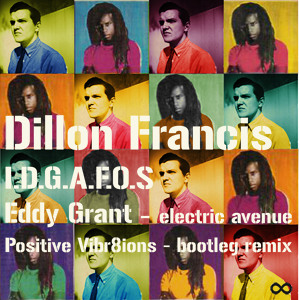
I.D.G.A.F.O.S. Electric Avenue (Positive Vibr8ions Bootleg) by positivevibr8ions
I.D.G.A.F.O.S. Electric Avenue (Positive Vibr8ions Bootleg) by positivevibr8ions
Sunday, January 15, 2012
Building Something Great
The Memeing of Life:
A Study in Human Symbolic Immortality
By
Matan Koplin-Green
From poetry I have raised a castle high
That neither wind nor rain can harm
After I'm gone, I will remain
My words are seeds well sown.
-Tusi Firdousi, 10th Century Persian Poet
Since the dawn of intelligent thought, humans have searched for ways to live forever. From Ponce de León’s quest for the fountain of youth, to current scientific efforts to radically extend the human life span, the idea of immortality has always pervaded the minds of philosophers and scientists alike. In fact, psychological research has shown that a desire for immortality is at the core of any healthy person. But can a human being really live forever? Ask the biologist, and he or she would say that we are far from achieving bodily immortality. Ask the artist, however, and he might say that immortality is secured in his art, which can survive far beyond the mortal coil of the artist himself. This ability to attain cultural immortality through our art and ideas is a phenomenon unique to the human race, and perhaps the most crucial characteristic that separates us from our primate ancestors. I will argue that the ultimate objective of human life is the inception and propagation of cultural ideas, or “memes,” simultaneously fulfilling the human psychological quest for immortality while involuntarily fueling the emerging epoch of technological evolution.
In order to fully understand the nature of human creation, one must understand the nature of creation itself. What is an idea? Since Charles Darwin proposed the theory of natural selection in the mid-19th century, evolutionary biologists have attempted to understand all living systems under an evolutionary lens. It is now common knowledge that almost every animal characteristic has evolved to help that animal survive, by providing the tools needed to beat out the competition and find nourishment. This will ensure that the animal can reproduce and pass down its genes, thus increasing the number of those genes in the gene pool. With the evolution of brains, animals gained increasingly clearer knowledge of their surroundings, giving smarter creatures a vital edge over their less smart – though perhaps physically stronger – rivals. The power of the human brain has given rise to the unbelievable emotional capacity of a human being, along with an unprecedented level of intelligence. We are capable of communicating, inventing, imagining, and learning on a scale no other species has ever experienced (Dawkins 1976, 36). This evolution, and the subsequent explosion of human creation, has given rise to the diversity and depth that we see in human culture. In turn, this culture provides the nurture to our nature; learned principals from the surrounding cultural milieu largely govern daily human activity. The mature human mind is arguably more saturated with ideas than with instinct. These ideas are not only capable of spreading both horizontally throughout a society, but also vertically through the generations, with the advent of communication and education. If a good idea is introduced into our culture, it has the potential ability to survive for hundreds, if not thousands, of generations (189).
This description of ideas may seem startling at first; it seems almost as if ideas have a life of their own. That is exactly what Richard Dawkins set out to prove in his landmark 1976 book The Selfish Gene. Dawkins introduces an entirely new, revolutionary framework for the study of ideas: meme theory. Dawkins found that ideas propagate and replicate in an extremely analogous manner to our genes. Meme theory defines the fruits of human culture in units of a meme, which is essentially any culturally transmitted idea. A novel, a song, a catchphrase, language, architecture, and religious tradition are all memes, some more powerful than others. A meme, like a gene, is in constant competition against rival memes for a spot in the meme pool. Only the strongest memes, the ones with the highest “survival value,” will secure a place in culture. Rather than being stored in our cells through DNA, memes store themselves in our minds (197). They are like viruses, infesting the innocent human psyche by preying on its curiosities, addictions, and desires. Although this account seems to grant ideas an intentional – and perhaps malevolent – stance, they certainly are not intentional, and not always malevolent. A music meme for a catchy song becomes popular because it was well written, and people enjoy listening to it. The medical community will adopt a new, more effective method of CPR because it saves more lives. While memes and genes can reinforce each other, some memes can directly oppose our genes, often for the worse. Memes for smoking cigarettes are certainly not healthy and only decrease our propensity to procreate, although they are successful in diffusion through many societies. Nevertheless, it is important to note that memes delineate a completely new evolutionary process, separate from genetic evolution (199).
Dawkins is in good company. In his 2005 futurist doctrine The Singularity is Near, inventor extraordinaire Ray Kurzweil takes this new process and fits it in an even larger picture of evolutionary shifts. He calls it “The Six Epochs of Evolution.” Each Epoch marks an increase in complexity in the proliferation of information, which is fundamental to any evolutionary process. Kurzweil traces our origins from Epoch One (information in atomic structure) to Epoch Two (information in DNA), and finally to Epoch Three (information in neural patterns). In this model, evolution works through indirection; in Kurzweil’s words, “each stage or epoch uses the information-processing methods of the previous epoch to create the next” (14). Genes would not be possible without atomic elements, and the evolution of intelligence would not be possible without the genetic evolution that preceded it. Between Epoch Three and Epoch Four lie Dawkins’s memes, and Epoch Four marks the arrival of human-created technologies (Epochs Five and Six are related to Kurzweil’s controversial theory of the Singularity, and will not be discussed here). For thousands of years, Mother Nature has developed and refined our neural system, to the point where our species ushered an even better way to store information: by invention (16). It is clear that technological advance – or, for that matter, any creation of culturally transmitted ideas – is actually activity of the next phase of evolution.
But why should we humans succumb to the stronghold of the memetic evolution, allow our minds to assemble the next generation of warrior ideas? The answer is simple: because we love doing it. Not only are we hardwired for procreation, but for innovation as well. Since the early hominids invented the first stone tools, humans have had an undying craving to create. Nevertheless, what drives this desire?
A human being – in fact, any living organism – strives for a prolonged existence. Even in the primeval soup of early molecules, only those compounds with longevity would survive and replicate (Dawkins 1976, 17). Before the evolution of consciousness, preservation of genetic material was all that mattered, as not much could be done about increasing individual lifespan. Humans, however, are a very different story.
Social psychiatrist Robert J. Lifton proposes that human creation is strongly correlated with our desire to live forever. Lifton found that people without a sense of everlasting continuity, such as those who survived the first atomic bomb, experience extreme emotional trauma and a general sense of meaninglessness (Lifton 1974, 683). Although a solution for true, individual immortality– that is, the perpetual existence of an individual consciousness – may be far out of reach, immortality may present itself in various symbolic ways. According to Lifton (1979), humans understand immortality in a hierarchy of different modes: biological, creative, transcendental, natural, and experientially transcendental (for the sake of clarity, I will limit myself to discussing the first two modes). Biological immortality simply refers to reproduction and continuation of family lineage; or, living through your offspring. This mode of immortality is both the most ubiquitous yet ineffective means to eternal life. According to Dawkins,
“We were built as gene machines, created to pass our own genes. But that aspect of us will be forgotten in three generations. Your child, even your grandchild, may bear a resemblance to you, perhaps in facial features or color of hair, or in a talent for music. But as each generation passes, the contribution of your genes is halved. It does not take long to reach negligible proportions… We should not seek immortality in reproduction (Dawkins 1976, 199).
Sexual reproduction may eternalize an individual gene, but certainly not an entire person. Pre-conscious creatures, however, had no reason to care; reproduction was the sole objective.
With the rise of consciousness, and thoughtful comprehension of the inevitability of death, a new option emerged. Lifton’s second mode of symbolic immortality, by creative means, displays the human side of meme theory. Aristotle and Socrates can live forever through their writing, even if not one of their genes still exists today. Picasso’s artwork has assured him a potentially everlasting existence in society. This highlights a major difference between genes and memes: memes bear a signature, genes do not. On the cover of every book is an author, on the bottom of every painting, an autograph, and in the title of every viral video, a username. A combination of Lifton’s theory of symbolic immortality and Dawkins’s meme theory illustrates a beautiful prospect for our ideas: that a great invention will not die with its inventor. Memes will forever replicate and diffuse according to evolutionary laws; all we have to do is create them.
This is not to imply that our basic drive to reproduce should be completely neglected. True, as biological creatures, as animals, it is our imperative to reproduce. But what is our ultimate responsibility as human beings? Given the state of this planet’s evolution, along with an understanding of our psychology, I would say that our true destiny lies in driving forward the memetic evolution. We are here to create, not just procreate. As Dawkins puts it, people are “built as gene machines and cultured as meme machines” (201). Anthropocentric as it may sound, we humans have used our spark of creativity to irreversibly transcend biology. Kurzweil has shown that biological evolution is only one epoch in a chain of possibly infinite epochs of evolution. The best part is that our biological identity does not resist this new evolution; quite the contrary, they work in parallel. Riding the wake of the emerging memetic evolution allows us to fulfill our biological desire for immortality. Like every other living organism, we seek eternal life, but we hold a unique, cherished method of actually succeeding in that goal.
We, as living organisms, have approached a new era of our own significance. No longer are we bound by the chains of our genes, destined to survive just long enough to pass them on. Rather, we are the pioneers of a blossoming landscape of new ideas, whose growth shows no signs of slowing. The memetic evolution and human psychology are codependent: technological advance requires human input, and humans need ideas to quench their thirst for eternal life. This glorious reciprocity has profoundly changed the answer of what it means to be alive. He who understands his natural mortality, and contributes positively to society in response, has arrived at a noble purpose in life. And those who create should have no fear of death. From the songs we sing to the tools we use, every cultural activity is also a precious act of immortalization for whoever had the idea. In fact, the very writing of this paper is a small reassurance that I, in some way, may live forever.
Friday, January 13, 2012
We Are Lions
I have a t-shirt company called We Are Lions. The t-shirts are designed by children and adults with disabilities and the proceeds go to the artist/organization that designed the orignal piece of art. The goal of my brand is to give opportunities to individuals with challenges by promoting their talents in a unique way. All We Are Lions shirts are limited edition and exclusive, much like the actual drawing/painting. Please visit my website at wearelions.org, learn a bit more where the art comes from and check out the Flickr, Facebook, and Youtube. If you would like to be a part of the street team, purchase a t-shirt, write STREETTEAM and refer people to buy a WAL shirt (two different people must buy a shirt and state that you referred them) and you will receive stickers and other goodies. To get a free shirt, five people must buy a shirt and refer you. Good Luck and Roar Loud!


Subscribe to:
Posts (Atom)